The hottest Florida news story may be different every day, but there's one topic that seems to come up over and over again – the price of gas in Ocala. If you feel like most of your paycheck goes into your gas tank, this post is for you. Here are several basic things people in Ocala can do to greatly reduce their gas consumption, save money, and help the environment. You can really improve your fuel economy by how you drive – but first, here's a review of things you can do for your vehicle that'll save gas no matter how you drive.
The first one for Ocala drivers is keeping tires properly inflated. That can save 2 miles per gallon/.85 km per liter. Driving on low tires is like driving through sand – your car just has to work harder. Most Ocala service centers will fill up your tires for free, so just ask Tuffy Ocala. Also, make a habit of checking your tire pressure whenever you fill up. Many Ocala gas stations have an air hose you can use for free.
Another important item is to keep your air filter clean. An air filter all clogged up with dirt and bugs doesn't let enough clean air through to efficiently burn fuel. Using a dirty air filter will cost you almost 2 miles per gallon/.85 km per liter in reduced fuel economy. And worn spark plugs can cost about the same. A spark plug can fire as many as 3,000,000 times for every 1,000 miles/1,600 km driven. Check the vehicle owner's manual for replacement recommendations.
The biggest item is the oxygen sensor. This device provides the engine management computer with information it needs to fine-tune the fuel/air mix. When that's messed up it can cost Ocala vehicles up to 3 miles per gallon/1.3 km per liter. And of course, there's dirty or substandard oil. Dirty oil causes extra drag. The wrong grade may be too thick. That's another .4 miles per gallon/.17 km per liter right there.
One item Ocala residents seldom think about is their gas cap. A worn, loose or missing gas cap can cost another 2 miles per gallon/.85 km per liter. Adding up all of these worn, missing or sub-par items leads to a total of almost 11.4 miles per gallon/4.85 km per liter in reduced fuel economy! And with current gas prices in the Ocala area, the cost really adds up. Taking care of these simple maintenance items will save Ocala drivers at the pump.
Now most vehicles aren't missing on all of these items, but think about which ones might affect you right now! And don't forget tune-ups, dragging brakes, low transmission fluid, fuel system cleaning, wheels out of alignment, PCV valve, fuel filter and other services spelled out in your owner's manual.
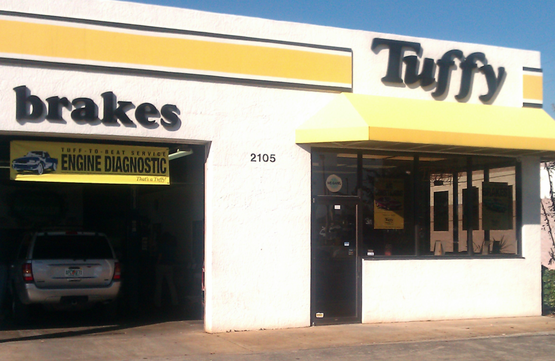
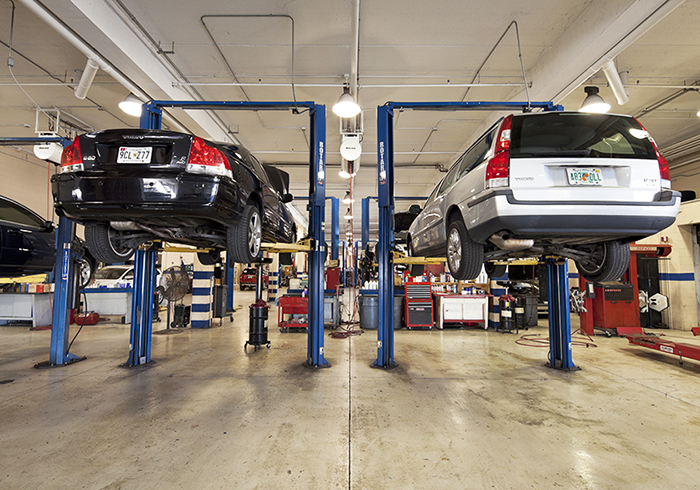
Tuffy Ocala knows all this stuff and can tell you when you're scheduled to take care of each item. Create a system of your own to track your service schedules, or just use the computer system at Tuffy Ocala – which may also be updated with recall notices and maintenance schedule items from your vehicle manufacturer.
Tuffy Ocala
2105 Southwest College Road
Ocala, Florida 34471
(352) 690-6111